
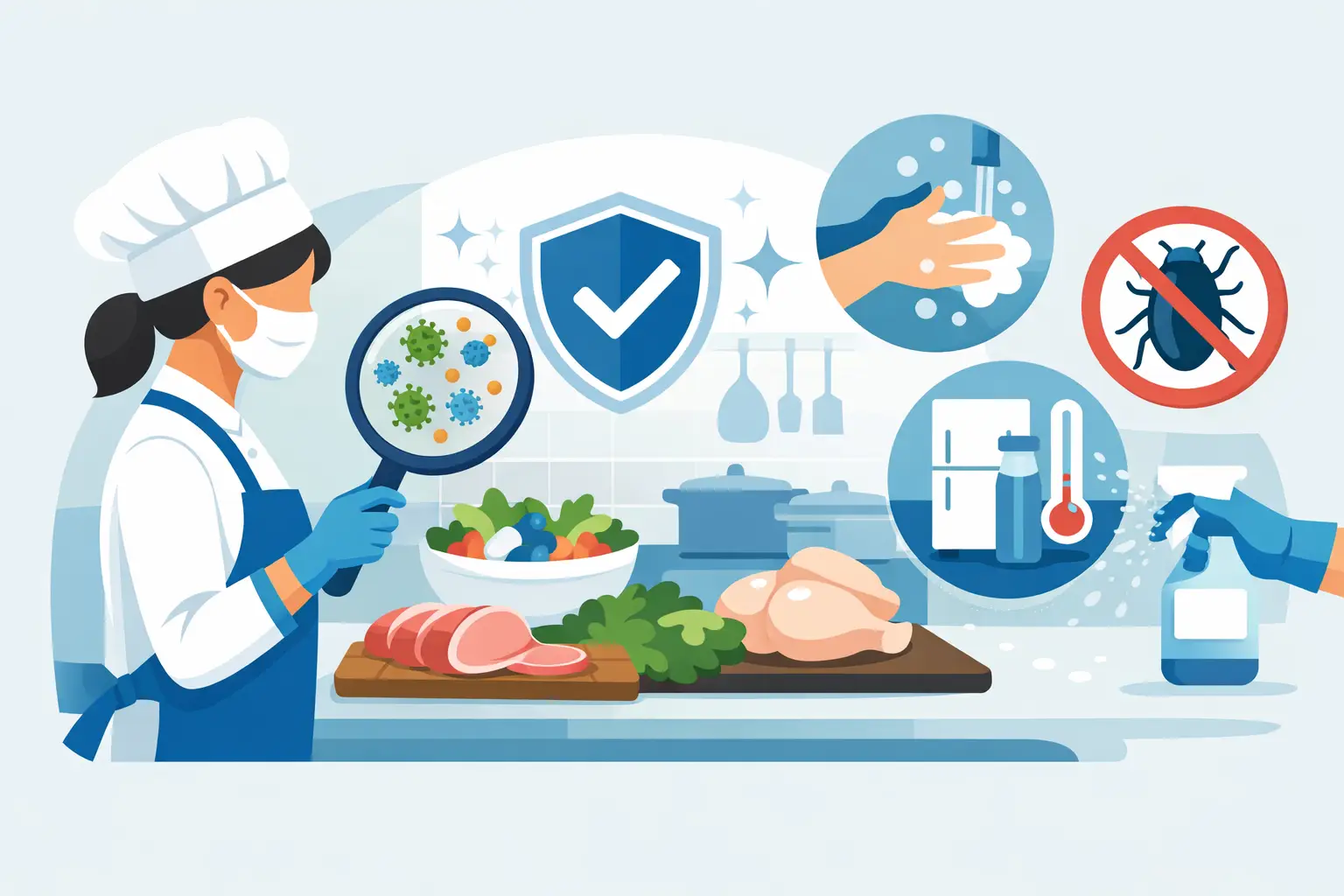
A tray of ready-to-eat food can look perfectly presented and still be exposed to risk. A shared serving spoon, an uncovered cabinet display, a rushed changeover between raw and cooked product, or a poorly cleaned lid can all compromise food safety. Knowing how to reduce food contamination means building reliable controls into each handling point, not relying on staff to catch a problem after it occurs.
For butchers, supermarkets, bakeries, caterers and hospitality operators, food safety needs to work at service speed. The most effective systems are practical, visible and easy for teams to repeat through a busy trading day.
Start with the main contamination risks
Food contamination is generally caused by biological, chemical, physical or allergen hazards. In a commercial operation, these risks often overlap. Raw poultry juices can transfer harmful bacteria to a ready-to-eat salad. A cracked plastic utensil can introduce fragments into food. An incorrectly stored cleaning chemical can contaminate ingredients, while an unlabelled sauce may expose a customer to an allergen.
The highest-risk moments are usually receiving, preparation, storage, display, service and cleaning. Each stage needs a clear method for separating food, protecting it from exposure and keeping equipment in a hygienic condition.
Contamination controls should reflect the food being handled. Raw meat, seafood, dairy, cooked meals, bakery items and ready-to-eat foods do not carry the same risk. The stricter the handling requirements, the less room there is for improvised processes or shared equipment.
Control food from delivery to storage
Good practice begins before stock reaches the display cabinet or prep bench. Check deliveries for damaged packaging, signs of pest activity, leaking containers and temperature concerns. Refrigerated and frozen items should be moved into suitable storage promptly, particularly during warm Australian conditions when loading areas and delivery vehicles can heat up quickly.
Keep raw food separate from ready-to-eat products in cool rooms, fridges and freezers. Store raw meat and seafood below cooked or ready-to-eat food so drips cannot reach products that will not be cooked again. Use clearly designated trays, tubs and containers rather than relying on memory or temporary labelling.
Lids are a practical control where food is being stored, transported within the premises or held between service periods. A well-fitted clear lid helps protect product from splashes, dust and unnecessary handling while allowing staff to identify contents without repeatedly opening the container. It also supports better stock rotation because labels remain visible.
Temperature control matters just as much as separation. Follow the temperature requirements that apply to your products and food safety plan, and check equipment with calibrated thermometers. Do not assume a cabinet is operating correctly because its display light is on. Record checks at appropriate intervals and act quickly when readings fall outside the required range.
Prevent cross-contamination during preparation
Separate work areas are one of the most dependable ways to prevent cross-contamination. Where dedicated benches are not possible, schedule tasks so raw food preparation is completed, cleaned down and verified before ready-to-eat food is prepared. This takes more discipline during peak periods, but it is safer than trying to manage conflicting tasks on a crowded bench.
Use dedicated utensils, chopping boards, knives and displayware for different food categories where required. Colour coding can help, provided the system is understood by every employee and is maintained consistently. A colour-coded utensil left in the wrong wash-up area is not a control unless staff know what to do with it.
Hand hygiene needs to be designed around real work patterns. Staff should wash hands before starting food preparation, after handling raw food, after touching rubbish, after cleaning, after using the toilet and whenever changing tasks. Gloves can be useful for particular jobs, but they are not a substitute for handwashing. Gloves become a contamination source when they are worn across multiple tasks or left on while staff touch tills, mobiles, door handles and food.
Keep personal items away from food preparation and service areas. Mobile phones, drinks, bags and paperwork can all transfer contaminants to clean benches or handling equipment. Provide a sensible place for these items so the rule is easy to follow.
How to reduce food contamination in display cabinets
Display is where food safety and presentation must work together. Open displays can be appropriate for some service formats, but they require greater attention to sneeze protection, utensil control, cleaning frequency and customer access. Ready-to-eat products should be protected from direct handling, droplets and contact with other product types.
Choose display trays, dishes and bowls that are smooth, durable and easy to inspect. Damaged equipment is harder to clean effectively because scratches, cracks and worn edges can hold food residue. Replace items that are no longer fit for purpose rather than extending their use because they still look acceptable from the front of the cabinet.
Clear lids are especially useful for pre-prepared products, cabinet replenishment and back-of-house holding. They protect food without hiding it, helping staff maintain an orderly display and reducing the need to expose food during checks. BPA Free, food-grade displayware such as the commercial trays and clear lids made by MTA Products can support daily handling where durability and visibility are both required.
Use clean, dedicated serving spoons, tongs or utensils for each product. Handles should remain clear of food, and utensils should be changed or cleaned whenever they become contaminated, dropped, damaged or moved between products. Avoid placing utensils directly on benches between uses. A clean utensil rest or designated holder is a small operational detail that prevents a common transfer point.
Do not overfill trays. Crowded displays are harder to serve cleanly, make stock rotation more difficult and increase the chance of food contacting cabinet surfaces or neighbouring products. Smaller batch replenishment may require more attention, but it usually improves appearance, freshness and control.
Make cleaning effective, not just frequent
Cleaning removes visible soil. Sanitising reduces microorganisms to a safer level after cleaning. Both steps are needed, and doing one without the other can leave a genuine food safety gap.
Establish a written cleaning schedule that identifies what must be cleaned, how often, which chemical to use, the required dilution, contact time and the staff member responsible. Food contact surfaces such as trays, lids, bowls, serving utensils, benches and slicer components need particular attention. Wash-up staff should have enough time and equipment to complete the process properly, especially around opening, closing and changeover periods.
Rinse and dry equipment as directed by the cleaning product and site procedure. Do not stack wet trays or lids where moisture can be trapped between surfaces. Store clean displayware away from raw food, chemicals and splash zones, ideally covered or inverted where practical.
Chemical control deserves the same care as food handling. Keep chemicals in original, clearly labelled containers and away from food storage and preparation areas. Never decant chemicals into drink bottles or unmarked containers. If a surface sanitiser is used incorrectly, residue can become a chemical hazard rather than a food safety control.
Train for repeatable decisions
A food safety procedure only works when staff can apply it under pressure. New employees need practical instruction on handwashing, separation, temperature checks, cleaning, allergen management and what to do when something goes wrong. A short demonstration at the relevant workstation is often more effective than asking staff to read a generic policy.
Supervisors should make safe practices easy to verify. Clear labels, designated storage locations, simple cleaning records and visible temperature logs help teams see what is expected. Correct issues early and specifically: replace the contaminated tong, move the raw product, clean the bench again, or discard food where safety cannot be assured.
Allergen controls require the same discipline. Keep ingredients accurately labelled, prevent shared utensils between allergen-containing and allergen-free items, and ensure staff know when they must not make assumptions. If cross-contact cannot be ruled out, communicate honestly rather than offering reassurance that the operation cannot support.
Respond quickly when control is lost
When food has been dropped, exposed to a dirty surface, held at an unsafe temperature, contaminated by raw product, or handled with questionable utensils, assess it conservatively. In many cases, disposal is the right decision. The cost of replacing a small amount of product is minor compared with the risk to customers, staff and the business.
Record recurring problems rather than treating them as isolated mistakes. If lids are regularly unavailable, utensils are mixed up, or cabinet temperatures drift at the same time each day, the underlying process needs attention. Better equipment layout, more frequent replenishment, clearer ownership or a revised cleaning schedule may solve the issue more effectively than another reminder to staff.
Food contamination is reduced through hundreds of ordinary decisions made well: a clean tray, a covered product, a separate utensil, a verified temperature and a staff member who stops to correct a risk. Build those decisions into the way your operation runs, and safe presentation becomes part of the standard customers can see and trust.