
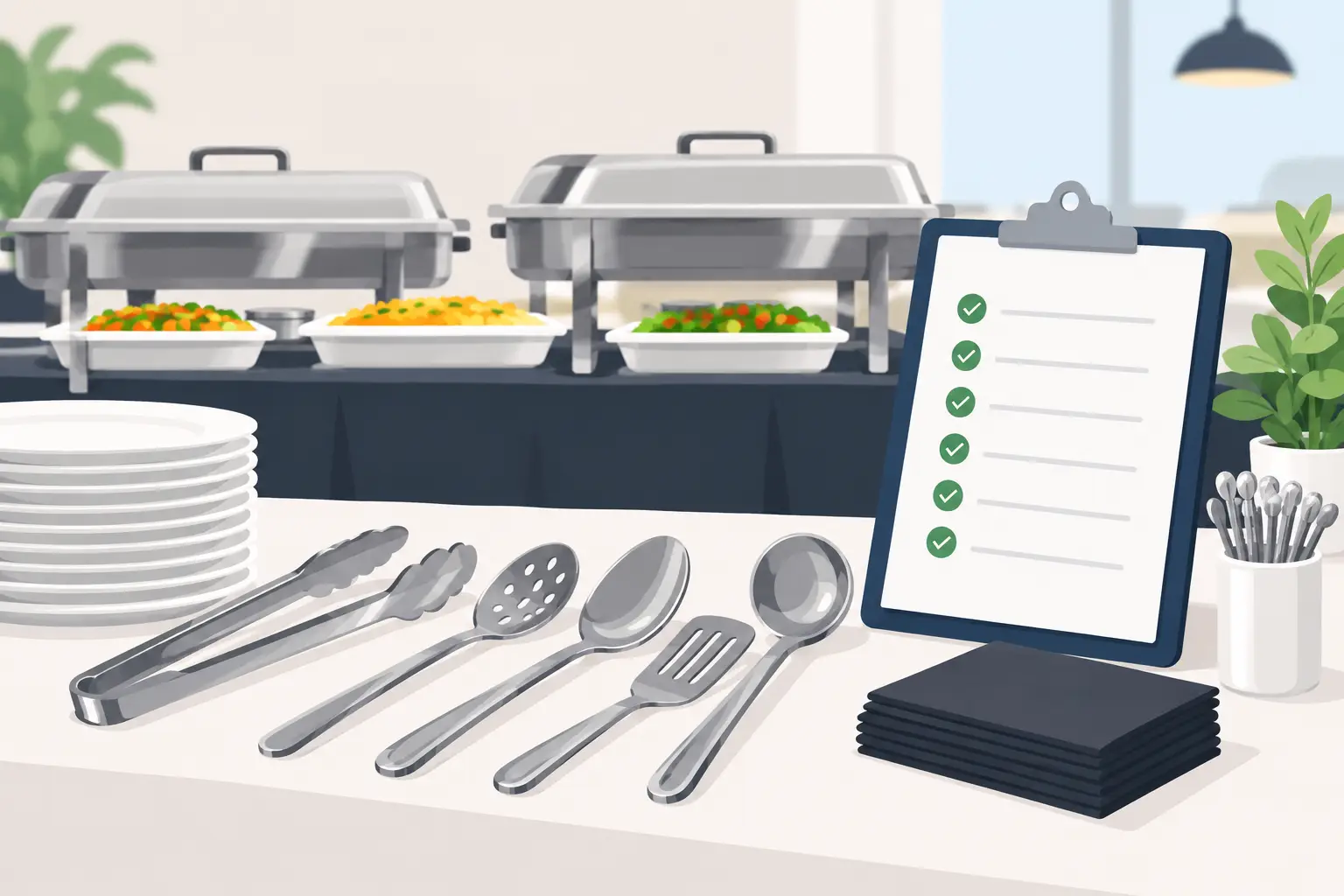
A buffet can be fully stocked and still underperform when the service tools are an afterthought. The right buffet serving tool checklist helps staff serve quickly, protects food presentation, reduces cross-contamination risks and keeps the counter looking organised through a demanding shift.
For caterers, bakeries, supermarkets, butchers and hospitality operators, the best setup is not necessarily the one with the most pieces. It is the one where every tray, bowl, spoon and lid has a clear purpose, suits the food being served and stands up to daily handling.
Buffet Serving Tool Checklist Before Service
Start with the menu, expected covers and service format. A breakfast buffet, salad bar, deli cabinet and function catering line may all use similar displayware, but the utensil mix and replenishment needs will differ.
Before food is placed on the line, confirm that you have:
- A dedicated serving utensil for each dish, including spoons, tongs, ladles, forks or slice servers where required
- Food-grade trays, platters, dishes and bowls sized for the menu and available counter space
- Clear lids for prepared food, backup stock and any display that needs protection between service periods
- Spare utensils for changeovers, dropped tools and busy service peaks
- Suitable labels, menu cards or allergen identifiers positioned clearly beside each item
- Clean replacement trays and bowls ready for fast replenishment
- Separate equipment for allergen-sensitive, vegetarian, vegan or raw food items
- A practical cleaning and collection point for used utensils and empty displayware
This preparation prevents the common mid-service scramble: staff using the wrong spoon, placing a hot utensil on the bench, or replacing an empty dish with a mismatched container that disrupts the presentation.
Select the right utensil for the food
Serving utensils should match both the portion size and texture of the food. A shallow spoon may be suitable for roasted vegetables but inefficient for saucy dishes. Tongs work well for pastries, rolls and sliced products, while a ladle provides better portion control for soups, curries and dressings. For salads and deli foods, a solid serving spoon and a slotted spoon often need to work together, allowing staff or customers to control excess liquid.
Handle length matters as well. Tools must reach comfortably into bowls or deep dishes without hands coming too close to food. At the same time, oversized utensils can be awkward in shallow display trays or compact cabinet layouts. Check the actual depth of the vessel rather than choosing by appearance alone.
A useful operational rule is one utensil per product, plus clean spares. Sharing a utensil between dishes may seem harmless during a rush, but it compromises presentation, creates avoidable allergen concerns and slows service when staff need to clean or replace it.
Build the Buffet Around Durable Displayware
Trays, bowls and platters do more than hold food. They determine how easily staff can replenish the buffet, how products are viewed by customers and how well the setup tolerates repeated handling.
BPA-free, food-grade displayware is a sound choice for commercial environments where food is handled frequently. For high-turnover service, drop-proof products can reduce the disruption and replacement cost associated with fragile display equipment. This is particularly valuable in retail cabinets, school canteens, healthcare food service and catered functions where staff are carrying multiple items at once.
Choose displayware with sizes that work across your service operation. A consistent tray system makes it easier to stack clean stock, rotate food and maintain a uniform counter appearance. For butchers, supermarkets and bakeries, trays that fit standard display cabinets help prevent wasted space and improvised setups.
Clear lids are equally practical. They protect prepared foods during transport, storage and quieter service periods while maintaining product visibility. They can also help staff stage replenishment stock in advance, provided food is stored at the correct temperature and in line with site food safety procedures.
Consider shape, depth and access
Wide, shallow platters are useful for foods that need visual impact, such as sandwiches, sliced meats, pastries and grazing items. Deeper bowls suit salads, pasta dishes, fruit and foods with dressings or sauces. Scallop bowls and trays can add definition to a display while keeping portions contained.
There is a trade-off. A large platter may look generous at the start of service, but it can leave food exposed for longer and become untidy as stock runs low. In many operations, smaller batches replenished more often produce a cleaner result and support better stock rotation.
Match Tools to the Service Format
A staffed buffet and a self-serve counter should not be equipped in exactly the same way. Staffed service can use more specialised utensils because trained operators control the portioning and placement. Self-service needs simpler, more intuitive tools that customers can use without causing spills or disturbing nearby dishes.
For self-serve food, keep utensils stable and easy to identify. Place handles facing outward and avoid crowding several tools into one area. Where foods sit close together, use separate dishes rather than relying on customers to keep utensils in the correct container.
For catering and functions, plan for movement. Serving trays should be easy for staff to carry, stable on trestle tables and suitable for quick reset between courses. If the buffet will be outdoors or exposed to frequent foot traffic, use durable displayware that will not create a major hazard if knocked from a table.
Hot and cold food require different checks. Confirm that each product is served within its required temperature controls and that the selected tray, bowl, lid or utensil is suitable for the intended use. Do not assume every food-grade product is appropriate for every heat source or dishwashing process. Product specifications and site procedures should guide that decision.
Plan Quantities for Peak Demand, Not Quiet Periods
The most frequent shortage on a buffet is not food. It is clean equipment. A spoon dropped on the floor, a tray needing replacement or a sudden rush at one station can quickly interrupt service when there are no backups nearby.
As a starting point, allow one primary utensil per dish and at least one spare for every high-use category. Keep extra serving spoons, tongs and ladles clean and accessible from the service area. For displayware, maintain enough trays, bowls and platters to support replenishment while used items are being washed or sanitised.
Your required quantity depends on the menu, service length and washing capacity. A short morning tea may only need a modest backup set. An all-day buffet or retail display with frequent turnover needs more depth, particularly where a dishwasher cycle cannot keep pace with service.
It also pays to standardise where practical. Using compatible tray sizes, lid formats and utensil styles reduces training time, simplifies storage and makes replacement ordering more reliable. MTA Products supports this approach with Australian-made, BPA-free display and serving solutions designed for regular commercial handling.
Keep Hygiene Visible and Practical
Good buffet hygiene should be easy for staff to maintain and easy for customers to recognise. Clean, dedicated utensils, protected reserve food and tidy displayware all communicate care before a customer takes their first serve.
Set utensils so handles remain outside the food area. Replace any tool that has been dropped, visibly soiled or used in the wrong dish. Staff should know where replacement tools are kept and who is responsible for checking the line during service. These small routines prevent a service issue from becoming a food safety issue.
Allergen management deserves particular attention. Use clear labels and separate serving tools for products containing common allergens. If a menu item is intended to be free from a particular allergen, position it away from products likely to create cross-contact and ensure staff understand the handling process. Labels alone are not enough when shared utensils are within reach.
Check Presentation Throughout the Shift
A well-presented buffet looks full without looking overcrowded. Keep serving utensils clean and aligned, wipe drips from bowls and trays, remove empty vessels promptly and rotate food before a display looks picked over. Clear lids can protect prepared replacement stock, while matching displayware keeps the counter consistent as items are swapped out.
Avoid overfilling bowls and trays. It makes utensils harder to use, increases spills and can make quality food look untidy. A controlled fill level is more professional and easier to maintain.
The most useful buffet setup is one your team can reset without hesitation. When every tool has a place, every food has a dedicated utensil and replacement displayware is ready before the rush, service stays cleaner, faster and easier to manage.