
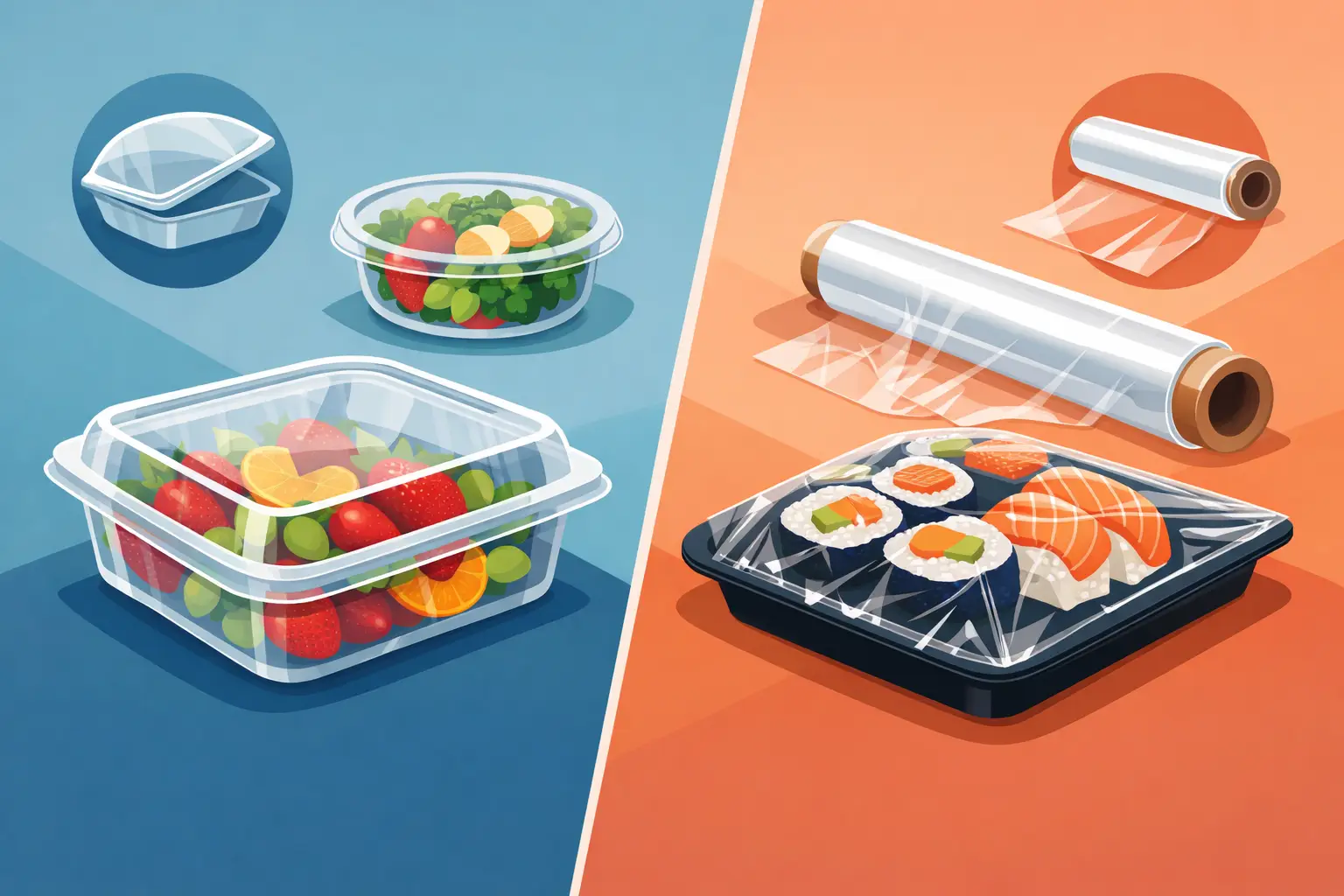
If you run a butcher shop, deli, bakery or catering operation, the choice between clear lids vs cling wrap shows up quickly in labour, presentation and product protection. Both have a place, but they do not perform the same way once trays are moving through prep benches, cool rooms, display cabinets and service counters all day.
For some businesses, cling wrap is familiar because it is cheap, available everywhere and easy to keep on hand. For others, clear lids make more sense because they protect presentation, improve handling and hold up better in a commercial environment. The better option depends on what you are packing, how often it is handled, and whether the tray needs to look sharp from first fill to final sale.
Clear lids vs cling wrap in day-to-day operations
The biggest difference is consistency. Cling wrap can work well for short-term coverage, especially in back-of-house prep where appearance is less critical and the item will be opened again soon. It stretches, clings and covers irregular shapes. That flexibility is useful, but it also creates variation. Some packs are neat, some are loose, and some end up with wrinkles, trapped air or torn corners.
Clear lids provide a more uniform finish. Once fitted to the right tray, they sit neatly, stack more predictably and hold their shape during transport from prep area to cabinet. In retail presentation, that consistency matters. A tidy, clear top helps the product speak for itself without the rippled, pulled look cling wrap often creates after handling.
This becomes more noticeable in high-turnover environments. If staff are repeatedly lifting, shifting and restocking trays, a rigid lid generally performs better than film that can sag, puncture or peel back. It is not simply a cosmetic issue. Better structure also reduces disruption during service.
Presentation matters more than many operators think
In food retail, customers buy with their eyes first. Fresh meat, smallgoods, pastries, ready meals and deli lines all rely on clean visibility. Cling wrap can be transparent, but once stretched over product it often reflects light unevenly and shows creases. Moisture can also build under the film, which affects visibility and makes the display look less precise.
A clear lid gives a flatter, cleaner viewing surface. That helps with product recognition, portion visibility and overall cabinet presentation. In butcher and supermarket settings, where trays need to fit standard displays and look consistent across a run of stock, that cleaner finish supports a more professional result.
There is also a practical side to presentation. A rigid cover is less likely to be pushed into soft toppings, icing, garnishes or delicate food surfaces. Cling wrap can compress product if it is pulled too tightly, which is fine for some lines and a problem for others. The more visually sensitive the product, the more likely a clear lid is the better fit.
Where cling wrap still earns its place
That does not mean cling wrap is obsolete. It remains useful for quick covering, awkward shapes and temporary storage. If a tray is going straight into a cool room for a short period before being reworked, wrapped portions can be a sensible and low-cost option.
It also suits applications where product is not customer facing, or where trays are unpacked soon after wrapping. In those cases, speed and material cost may outweigh the need for a premium finish.
Hygiene and food protection
When comparing clear lids vs cling wrap, hygiene is usually one of the first operational concerns. Both can provide a barrier, but they do so differently.
Cling wrap depends heavily on application. If the wrap is loose, torn or not sealed properly around the tray, protection is reduced. In busy prep periods, that kind of inconsistency is common. Film can catch on bench edges, gloves, jewellery or product corners. Once damaged, it stops doing its job properly.
A well-fitted clear lid gives a more stable cover with less dependence on operator technique. Staff do not need to stretch, smooth or rework the material to get acceptable coverage. That can help maintain cleaner handling standards, especially where multiple staff are involved across shifts.
In commercial settings beyond food retail, such as healthcare, education, laboratory or pharmaceutical environments, sturdier covered trays can also be easier to manage where contents need protection during movement or temporary storage. The requirement is not always just covering an item. It is covering it reliably.
Handling, stacking and transport
This is where the difference often becomes obvious. Cling-wrapped trays can be awkward to stack because the surface is not rigid. Film can grip, slide or collapse depending on tension and the weight above it. If the product sits high, stacking may be limited altogether.
Clear lids support better handling because they create a firmer top surface. That makes it easier to move stock between work areas, place trays into cabinets and maintain a more orderly setup in cold storage. In operations with repeated tray movement, this can save time and reduce spoilage from accidental knocks or pressure damage.
Drop resistance matters too. While no cover prevents every issue, a durable tray and lid combination is generally better suited to everyday commercial use than a soft film wrap over a tray that may be bumped, shifted or carried at speed. For operators who deal with high volumes, that practical resilience adds up quickly.
Labour is part of the cost equation
Cling wrap may seem cheaper at first glance, but unit cost is only part of the story. Applying film neatly takes time. Poorly wrapped trays often need to be redone, especially for front-of-house display. Staff can also use more wrap than expected when trying to secure difficult shapes or create a cleaner finish.
Clear lids usually reduce that handling time. If the lid matches the tray properly, staff can cover product faster and with more predictable results. Over a full day of production, labour efficiency can matter as much as packaging spend.
For wholesale buyers and larger operations, this is often the turning point in the decision. The cheapest covering method is not always the most economical one once rework, presentation losses and slower packing times are factored in.
Suitability by product type
Some foods simply suit one option better than the other. Flat or low-profile items with a short holding time may be perfectly manageable under cling wrap. Bulk prep, marinating trays or temporary back-of-house storage often fall into this category.
Products that benefit from shape protection, clear top presentation or frequent handling tend to favour lids. Fresh meat displays, bakery goods, platters, prepared foods and service trays usually present better and travel better with a rigid clear cover.
If stock needs to move from prep to display to service with minimal repacking, a lid is usually the more reliable choice. If it is a quick cover between production steps, cling wrap can still be practical.
Clear lids vs cling wrap for commercial buyers
Commercial buyers are not just choosing a covering material. They are choosing a workflow. That means looking at tray compatibility, repeat ordering, fit in standard cabinets, durability under daily use and how the final display looks to the customer.
A clear lid system is often the stronger long-term option where consistency matters. It supports presentation, easier handling and a more professional result across multiple product lines. For Australian businesses that need BPA-free, food-grade displayware suited to repeated use, there is also value in choosing products designed for commercial conditions rather than relying on a stopgap packaging solution.
Cling wrap remains useful, but it is best thought of as one tool rather than the default answer for every tray. It works well for temporary coverage and some prep tasks. It works less well where stock has to hold its appearance, stack cleanly and withstand frequent movement.
For operators weighing up the switch, the simplest question is this: does the tray need to look good, travel well and stay protected through the day? If the answer is yes, a properly matched clear lid will usually do the job better. MTA Products supplies Australian-made, BPA-free tray and lid solutions built for exactly that kind of commercial use.
The right choice is not about replacing every roll of wrap in the building. It is about using a stronger option where presentation, protection and reliable handling actually affect the way your business runs.