
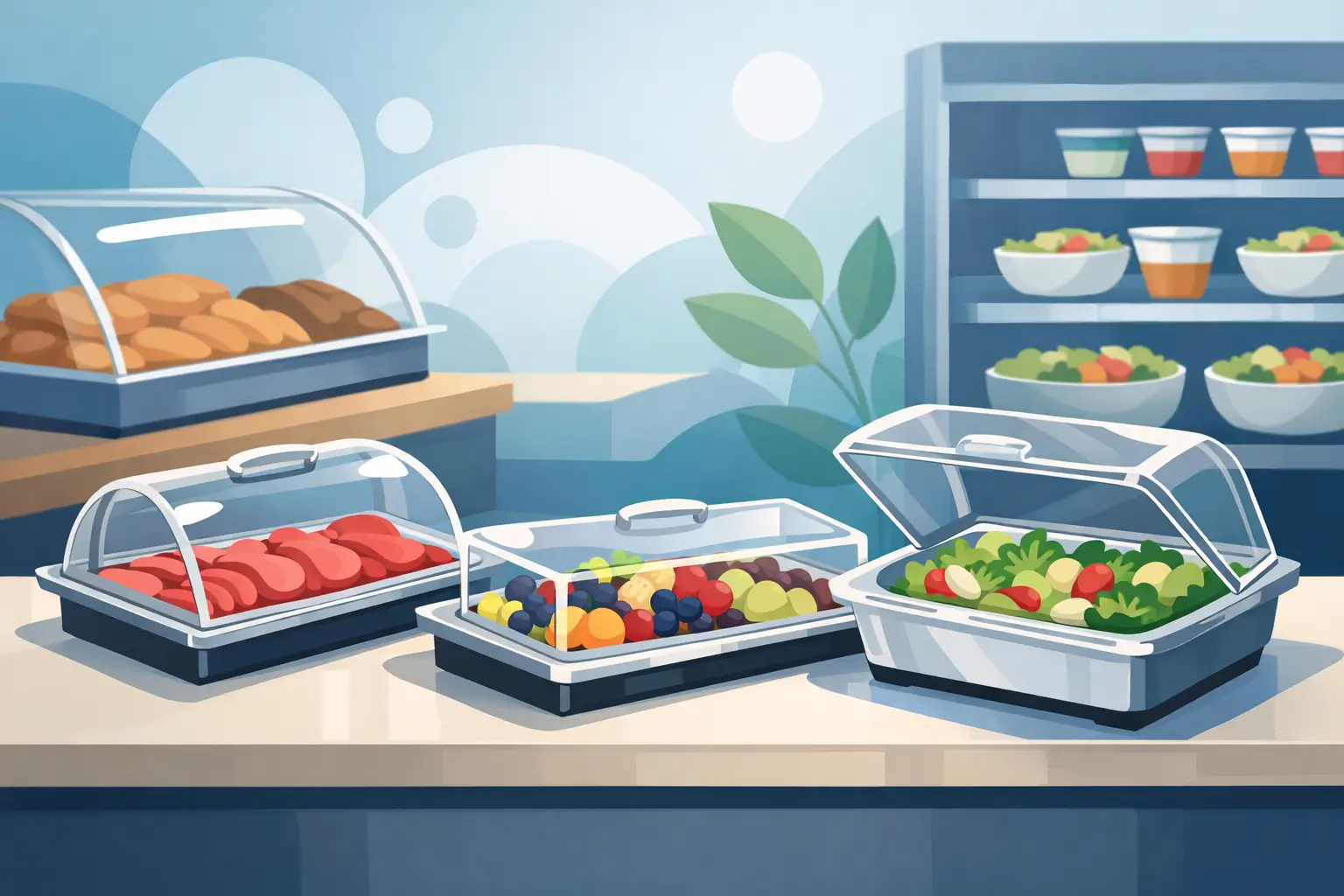
A well-stocked display cabinet can lose its appeal quickly when exposed food dries at the edges, attracts airborne debris or is handled more often than necessary. For butchers, bakeries, supermarkets and caterers, selecting top tray lids for freshness is not simply about covering stock. It is about protecting presentation, supporting hygienic service and keeping the cabinet organised through a busy trading day.
A clear lid should help customers see the product at a glance while giving staff practical access during replenishment and service. The right choice depends on the tray it is paired with, the food being displayed, cabinet conditions and how often the item will be handled. A lid that fits correctly and stands up to daily use is a small component with a direct effect on waste, workflow and display standards.
Top Tray Lids for Freshness Start With the Right Fit
The most effective lid is one designed to sit securely on its matching tray. A close fit helps limit exposure to dust, splashes and airflow while keeping the tray looking neat in a refrigerated cabinet, counter display or preparation area. It also reduces the chance of the lid shifting when staff move trays in and out of service.
Avoid treating lid sizing as an afterthought. Measure the tray’s external dimensions and confirm that the lid is made for that tray format, rather than selecting a near match. A lid that is too small may sit unevenly or leave gaps. One that is too large can move during handling, create an untidy appearance and make stacking less reliable.
For operators using standard butcher or supermarket display cabinets, tray dimensions matter beyond the individual unit. Consistent sizes make better use of cabinet space, support straight display lines and simplify replenishment. When lids and trays are selected as a system, staff do not need to spend time matching loose components during a rush.
A Lid Protects Presentation, Not Temperature Control
Clear lids can assist with maintaining the surface quality of food by reducing direct exposure, but they are not a substitute for correct food storage procedures. Refrigerated products still need to be held at the required temperature, rotated according to site procedures and protected from cross-contamination. Hot food requires its own appropriate holding arrangements.
This distinction is particularly relevant for fresh meat, prepared salads, bakery products and ready-to-serve items. A lid may help prevent a product from drying out as quickly or being exposed to handling, yet freshness ultimately relies on temperature, preparation standards, cleaning practices and stock turnover. The practical benefit of a good lid is that it supports those controls without making the display difficult to operate.
Clarity Helps Food Sell Before It Is Served
In a retail cabinet, the customer should be able to assess the product without staff repeatedly lifting a cover. Clear tray lids preserve visibility of portion size, colour, garnish and product arrangement, which is especially valuable for premium cuts, pastries, deli selections and catered platters.
Optical clarity does more than improve appearance. It can reduce unnecessary handling. When customers and staff can identify items through the lid, there is less need to uncover several trays to locate one product. This supports cleaner service and helps maintain a more orderly counter.
Clarity needs to be matched with material performance. Thin or brittle lids can scratch, crack or become cloudy under frequent washing and handling. In commercial environments, lids are routinely lifted, stacked, moved between preparation and display areas, and washed alongside other equipment. A food-grade, BPA-free lid made for repeated use is a better operational choice than a disposable-looking alternative that needs early replacement.
MTA Products supplies Australian-made displayware designed for demanding commercial presentation, storage and service environments. When choosing clear lids, buyers should look for a finish that keeps the food visible while providing the durability needed for regular day-to-day handling.
Choose Materials for Daily Commercial Use
Food-contact equipment needs to be selected with safety and service life in mind. BPA-free, food-grade materials provide confidence for businesses handling products intended for direct consumption. This is relevant not only in food retail and hospitality, but also in healthcare, education, pharmaceutical and laboratory environments where clean, dependable handling equipment is required.
Durability is equally practical. A lid can be dropped during wash-up, knocked against a bench or stacked incorrectly at the end of a shift. Drop-proof products help reduce breakage compared with fragile display materials, lowering replacement costs and avoiding the immediate disruption caused when damaged equipment has to be removed from service.
That does not mean every application needs the heaviest option available. For low-volume domestic pack preparation or occasional event use, ease of handling may take priority. In a high-turnover supermarket, butcher shop or catering kitchen, however, the better investment is usually a lid that can tolerate repeated handling without losing its fit or presentation quality.
Consider Access, Stacking and Service Flow
A lid should protect stock without slowing down the person serving it. Consider how staff access the tray: whether they lift the lid completely away, place it on a clean bench, rest it against the display or cycle several trays through a service area at once. The best arrangement is the one that fits established work practices and can be kept clean without creating congestion.
Stackability is also valuable where storage space is limited. Matching trays and lids that stack predictably make it easier to keep spare displayware organised in a cool room, storeroom or preparation zone. They can also make transport between sites or functions more manageable. Poorly matched components often create unstable stacks, wasted shelf space and extra handling.
For businesses operating multiple counters, departments or venues, standardising a small range of tray and lid sizes can improve efficiency. Staff become familiar with the formats, replacement ordering is simpler and displays look consistent across the operation. Standardisation is not always suitable for specialist products or unusual cabinet sizes, but it is worth considering where volume is high.
A Practical Buying Check Before Ordering
Before purchasing standalone lids or trays with clear lids, check the operating conditions rather than buying on appearance alone. The following points are useful for trade and wholesale buyers:
- Confirm the lid is designed for the exact tray size and profile being used.
- Check that the material is food-grade and BPA-free for the intended application.
- Assess clarity in the lighting conditions of the cabinet or service counter.
- Consider whether the lid will be washed, stacked and handled repeatedly during each shift.
- Match the format to available cabinet space, storage shelves and service procedures.
- Plan for replacement and expansion by selecting a supplier with consistent product availability.
This approach helps avoid a common problem: purchasing lids that look suitable individually but do not perform well once they are in a busy cabinet. A good display system should be easy to replenish, easy to clean and dependable enough that staff can focus on serving customers rather than managing equipment.
Cleaning Keeps Clear Lids Working Properly
Even a high-quality clear lid will lose its presentation value if cleaning procedures are inconsistent. Wash lids according to the material guidance and site hygiene requirements, then inspect them before returning them to food service. Residue, scratches and clouding are more noticeable on clear displayware than on solid-colour equipment because they sit directly between the customer and the product.
Separate damaged items promptly. Cracked or distorted lids may no longer sit properly on the tray, and they can undermine hygiene and presentation standards. Keeping a small number of compatible replacements on hand can prevent staff from improvising with unsuitable covers when equipment is damaged or misplaced.
For teams that rely on food displays to sell product, the right lid is part of the presentation standard, not an accessory. Choose one that fits the tray, keeps food visible, supports hygienic handling and holds up to the pace of commercial service. The result is a display that looks considered at opening time and remains practical through the final customer of the day.